
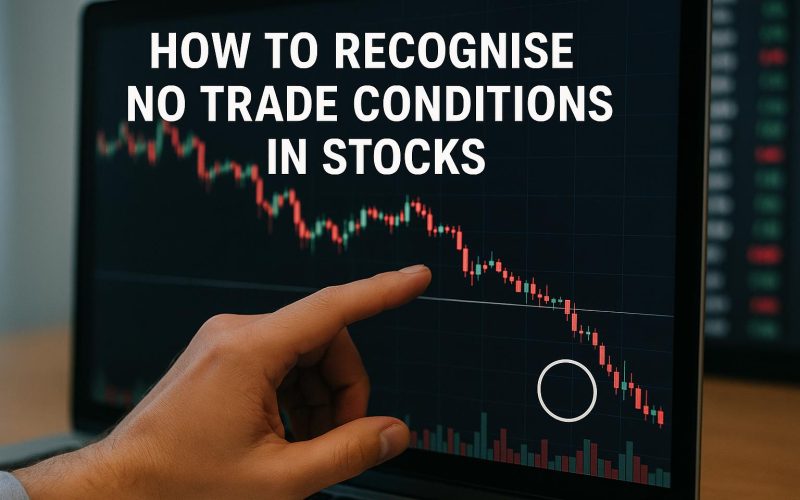
Understanding No Trade Conditions in Stocks
The decision of whether to initiate a trade or not is fundamental in stock market engagement. Recognizing the right time to refrain from trading is as essential as spotting promising trading opportunities. This process of discernment is not only about identifying moments to capitalize on but also about understanding when to pull back to conserve capital. Here, several critical factors are outlined to help traders determine no trade conditions in the stock market.
Market Volatility
Market volatility represents one of the foremost factors in identifying no trade conditions. Volatility refers to the spontaneous changes in stock prices, which can render the market somewhat unpredictable. Traders often find it challenging to forecast these price movements during turbulent times, and forecasting inaccuracies can lead to undesirable outcomes. The VIX, commonly named the “fear index,” serves as a pertinent indicator to gauge the level of market volatility. High readings on the VIX suggest heightened investor fear, prompting traders to reconsider engaging in trades. During these volatile periods, it might be strategic to adopt a more conservative approach and delay trading until the situation stabilizes.
Ambiguous Technical Signals
Technical analysis is integral to making informed trading decisions. However, instances arise when technical indicators generate conflicting signals. When such a scenario unfolds, traders are often presented with uncertainty. For example, if a stock’s moving average suggests a buying opportunity, yet the Relative Strength Index (RSI) warns of overbought conditions, this inconsistency should signal caution. The presence of ambiguous technical signals requires waiting until more straightforward and reliable information becomes available, thereby reducing the risk of incurring unnecessary losses.
Sideways Markets
A sideways or range-bound market is characterized by stock prices oscillating within a narrow range without a discernible trend direction. Such a market condition can be particularly challenging for traders seeking capital appreciation through trend-based strategies. In these circumstances, holding off trades might be advisable unless an approach explicitly designed for trading within ranges is employed. The pragmatic choice for many traders is to wait until the stock price breaks free from the constraints of the range, establishing a clear upward or downward trajectory.
Economic and Political Events
The influence of economic and political developments on the stock market is profound. Announcements related to economic policies, central bank activities, or political shifts, including elections or emerging geopolitical tensions, often generate significant market uncertainty. During these intervals, the volatility and unpredictability of market responses tend to increase, and it becomes increasingly challenging to make sound predictions about stock movements. Rather than immediately trading on speculation or emotion, a more cautious approach would be to wait until the immediate impacts of these events are well-understood and their longer-term implications clearer.
Low Liquidity
Trading in markets characterized by low liquidity invariably presents heightened risks. A lack of liquidity implies fewer active market participants, which can make it more challenging to enter or exit positions without causing substantial price movements and affecting execution costs unfavorably. Slippage, where the expected price and the actual transaction price differ, can become problematic. Low average daily trading volumes contribute further to this challenge. Opting to trade in well-supported markets with substantial volume is advisable, enabling smoother transaction flows and minimizing unexpected fluctuations.
In conclusion, recognizing no trade conditions is a crucial component of successful trading and risk management. A disciplined and analytical approach is necessary to combat the multitude of factors potentially signaling against trading engagement. As prospective traders integrate strategies into their overall trading repertoire, the capacity to discern when to abstain from trading becomes essential. Considering elements such as market volatility, conflicting technical signals, range-bound market conditions, economic and political events, and liquidity constraints ensures a judicious and prudent trading approach.
Being equipped with this knowledge, traders position themselves to preserve their capital and thereby craft a more resilient trading strategy. Bypassing periods characterized by uncertainty and potential losses enhances the likelihood of long-term success in the stock market. For those interested in delving deeper into this topic and expanding their understanding of trading strategies and financial markets, accessing resources dedicated to investing and financial education, such as Investopedia, proves invaluable.
This article was last updated on: October 9, 2026